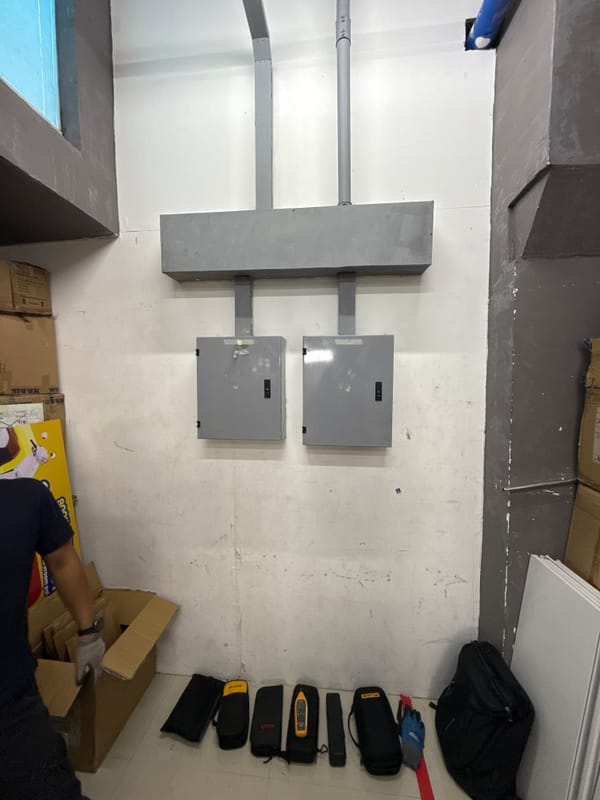
The Automatic Transfer Switch Issue in our Hybrid Solar PV setup

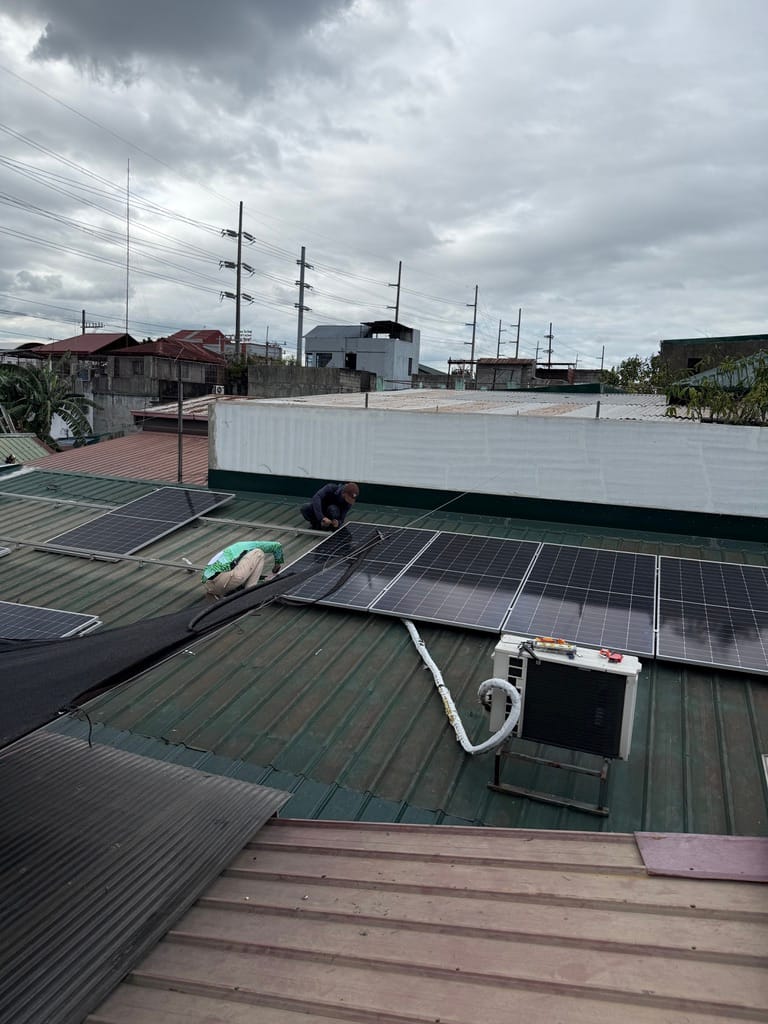
We installed in January a 5.85kW hybrid system with (2) 100Ah/ 48V batteries.
Now that I think about it, the number of modules charging the batteries is a bit inadequate but it can't be helped due to lack of roof space.
And to think even further, I am wondering if it was a better design to get a bigger inverter than 6kW and just integrate the already installed 3kW system that's there. Perhaps it the only limiting factor would have been the number of PV inputs on the inverter.
On second thought maybe this wouldn't have worked since the older modules are 250W. Instinctively I know that batteries require equal charging and I'm not sure if the inverter is capable of supply current equally to the batteries.
On third thought, when I conducted a thermographic inspection of the modules after installation, there were a lot of thermal anomalies on String 2. After checking the monitoring system (Shine) it doesn't seem to specifically state the charging behavior of the batteries, something that needs to be noted when physically at the site.
Now the really crux of the issue and the reason for this post.
When we started the installation, all the equipment was basically a transfer of assets from one failed project to Tito Andy's house. This fact is something--after hindsight--that I totally underestimated. Engineering logic, however, would tell you that going about business in this way is a sure way to invite hiccups in the installation as well as post installation.
The first hiccup was about the design of the property. The property is a U-shape. This should normally be a non-issue unless of course the MDP was confined in a small wet space on one side of the U, and the only BOS system placement area being on the other side of the U. This means that PV source circuit would have to run to one side of the U and the AC conductors would run around the entire U. The distance means we would have to upsize the conductors due to conductor resistance from PV wire (10AWG) to 8AWG, which meant conductors for two strings and ground wire. That is 5 wires and P44,000. To make matters worse we mistakenly thought that 10AWG would be enough and prematurely bought them.
The second hiccup was the ATS. Bop already had a rig designed and all he needed to do was plug and play. What I didn't realize was that the inverter he used in his failed project was Victor brand (never heard of them) and that the unit didn't have an internal ATS; thus, this is the reason why he got an external ATS.
The third hiccup is that this was our first time installing and setting up a hybrid system. This point is the reason I was excited to do the project--to see all the pitfalls and and points of doing something like this. This also meant that I needed to brush up on my studies on hybrid inverters and batteries systems. Suffice to say I had outdated material--Dunlops Photovoltaic systems (2013) doesn't really help in 2026 and I have to separate knowledge on what is outdated from what still applies today.
Going back to the second hiccup, I didn't realize about the internal ATS in the Growatt inverter. The Victor brand Bop used did not have an internal ATS and that was the reason he had to get an external one. Since I didn't know how to properly program the inverter, we went ahead and made the Solar PV/ batteries as the primary source for the loads, and Meralco as a secondary. You can imagine that a combination of cloudy days where the batteries are insufficiently charged and not programming the correct set points for charging would lead to the ATS cycling back and forth from battery power to Meralco over and again. This high cycling of the ATS over 20 days eventually oxidized the contacts and caused a spark (on Feb 20th morning). We did eventually disconnect the PV/ battery system from the house.
Going back to the issue with having an external and internal ATS, I had to ask Chat about the consequences of having two ATSs. Maria Fe was mentioning that there were fluctuations of their LED and that some bulbs were prematurely failing. I have had my share of busted bulbs because of fluctuations and overvoltage spikes at my condo. I would imagine that the same had happened here.
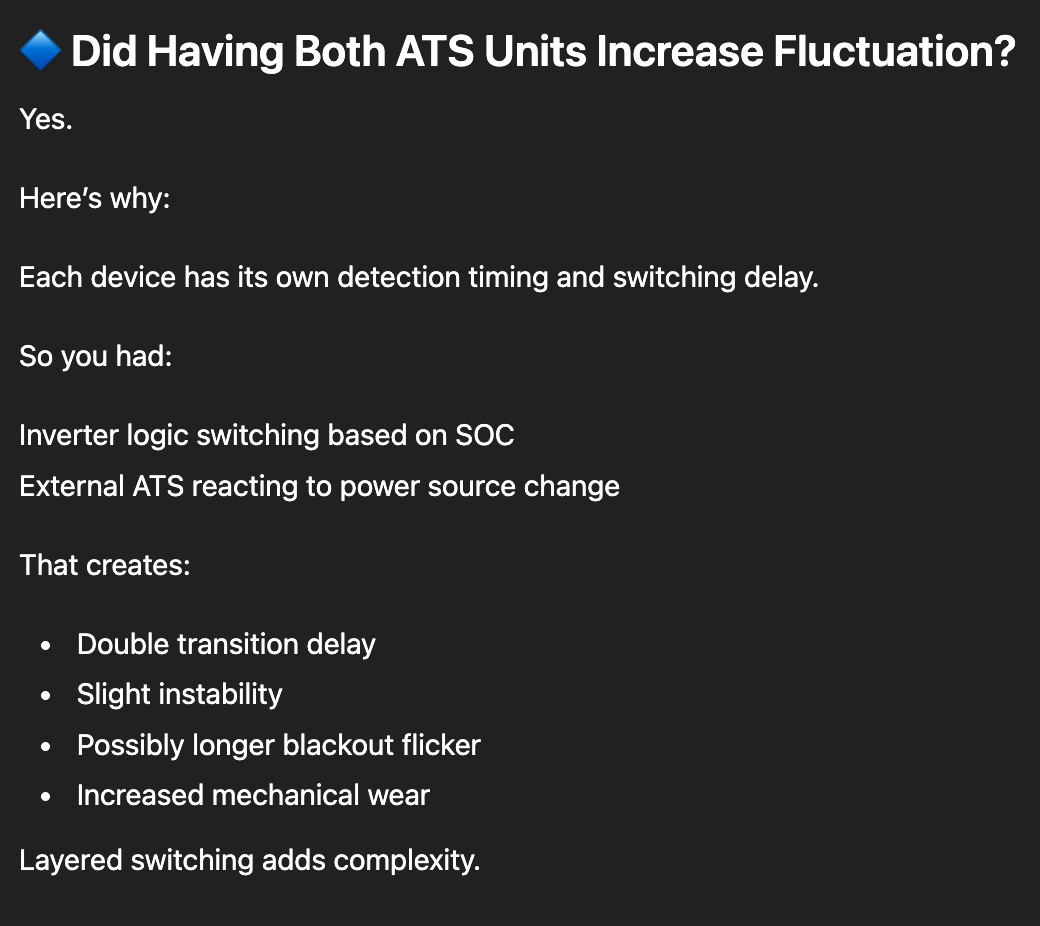
This makes a lot of sense but I think I need to confirm this somehow.
I asked this same question of redundancy from the supplier of our inverter (Sungrid). This was the engineer's reply:
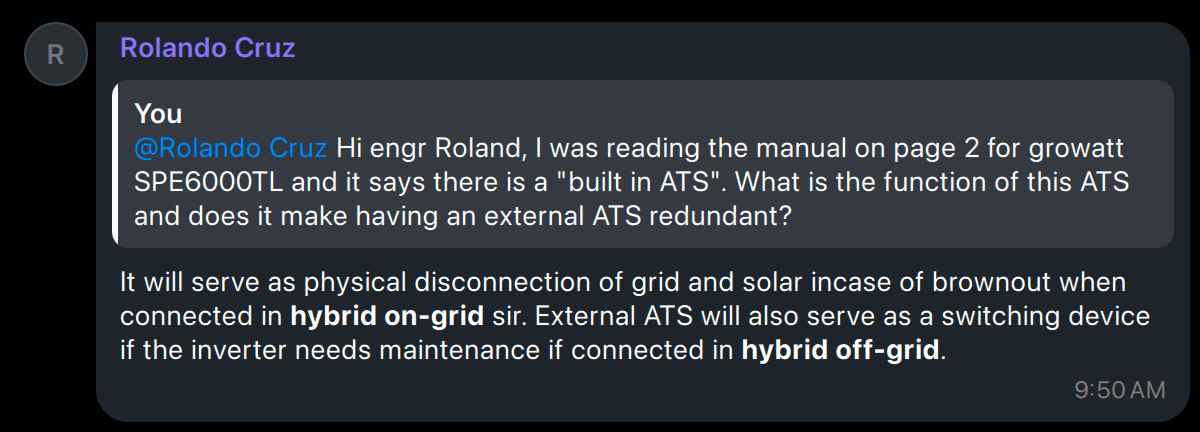
At this moment I have to say that his first sentence "It will serve as a physical disconnection of grid and solar in case of brownout when connected in hybrid on-grid" misses the point that the internal ATS will do that job anyways. His second sentence "External ATS will also serve as a switching devie if the inverter needs maintenance if connected in hybrid off-grid" would mean that an ATS is not needed here and only a regular disconnect switch would suffice.
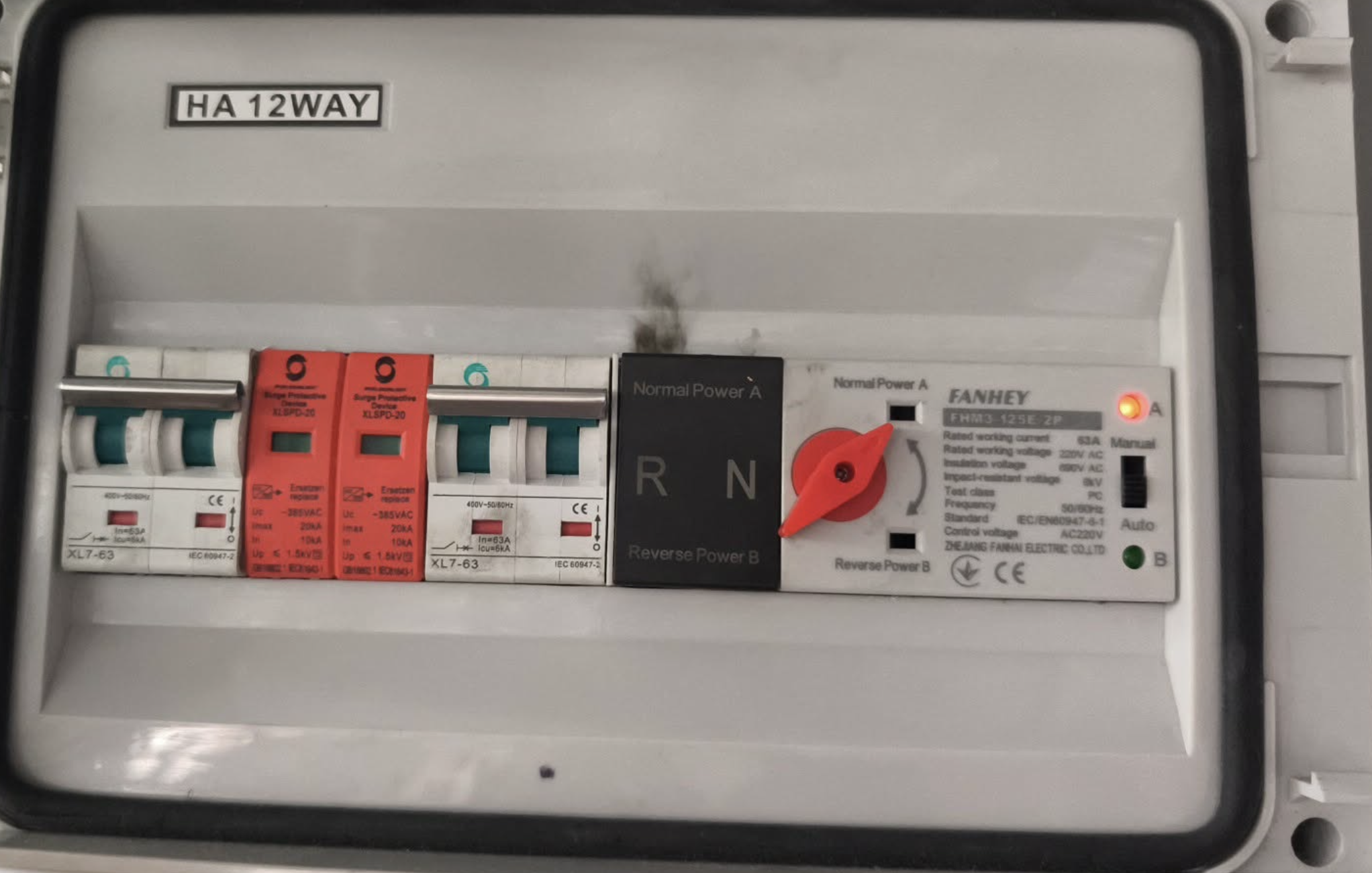
The main switching contacts burned up from the constant mechanical switching events.
Now we have to decide what to do going forward.