Ultrasound and Thermographic inspection of Rockwell Power Plant

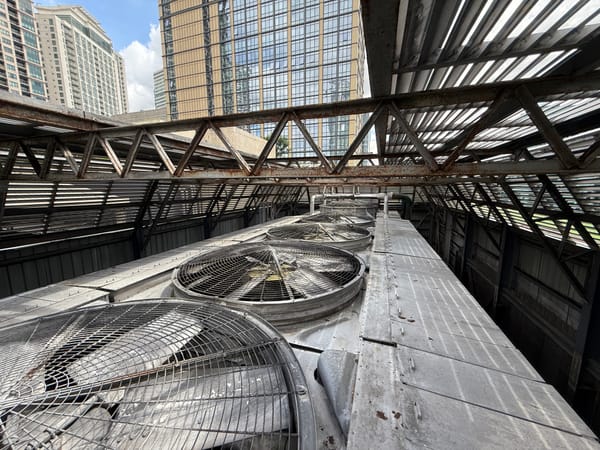
I'm not making this post to report a finding or realization. It is to just note that I completed a partial inspection of the Rockwell Power Plant chiller system. I have inspected Chiller 2, 3, 4, and 6. I only inspected those motors and pumps and did not inspect the Secondary Pumps.
I've learned that when you make your tree structure for UAS3, I need to make sure that I actually create a structure for the Secondary Pumps and an entire structure for the Coupling inspection, naming all of the motors and pumps. In other words, if you don't structure the inspection tree correctly, you cannot proceed with a test.
Another insight I had was using the thermal camera on the Volute. It is said that a volute experiencing cavitation will look cooler because the collapsing vapor bubbles creates micro-cooling. I tried it but could not see any thermal gradient or anything suspect of a thermal anomaly (even though I know that particular volute has cavitation). The only way to find out is to do a comparative inspection with another condenser pump.
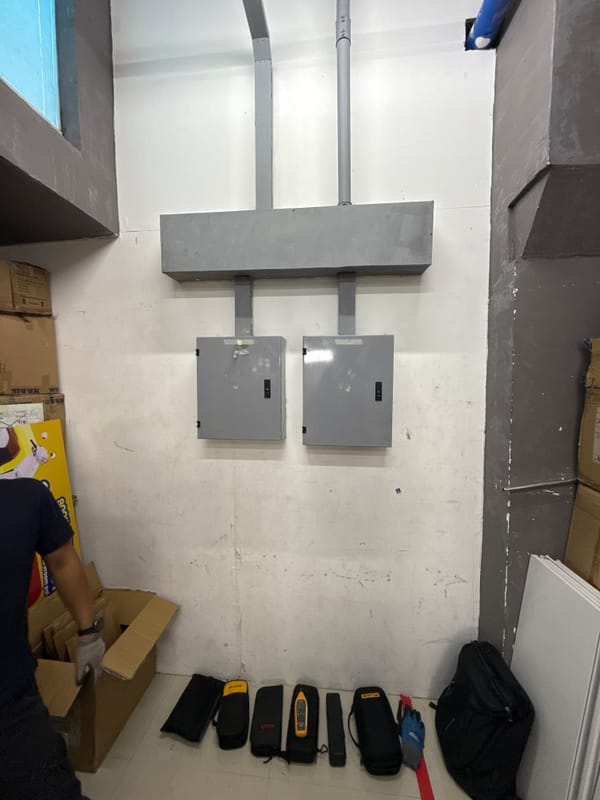
I found arcing on both Secondary pump 4A and 4B's electrical panel, main breaker. I will go back and record it for my repository of sound files for equipment failures.
I'm pretty excited that I created a good tree structure for trending these assets and hopefully I can make a nice little report. This will really good for my confidence and learning.
Lastly, this data collecting for Rockwell has been beneficial to me. The Chiller systems, as far as I can tell, are slowly failing. Chiller 4 specifically has the most issues. It has issues with the motor, pump, compressed gas, and electrical system. To do a root cause analysis is challenging and I often think about the chicken and the egg. Does severe cavitation actually cause stress to the motor and chiller, and, as a tertiary effect, the electrical system? Or did the issue start with the gas leak which leads to a decrease in system pressure thus initiating the effects of cavitation?
I'm afraid that even if we do a Power Quality Analysis, the damage has been done and we won't find data that may assist us in determining the root cause. But I certainly wouldn't mind having that data in my hands.